Product updates

How AI is transforming patient documentation: the Nextvisit approach to instant letters and forms

Mental health professionals know the struggle all too well: a patient needs an emotional support animal letter by tomorrow...

Article Image

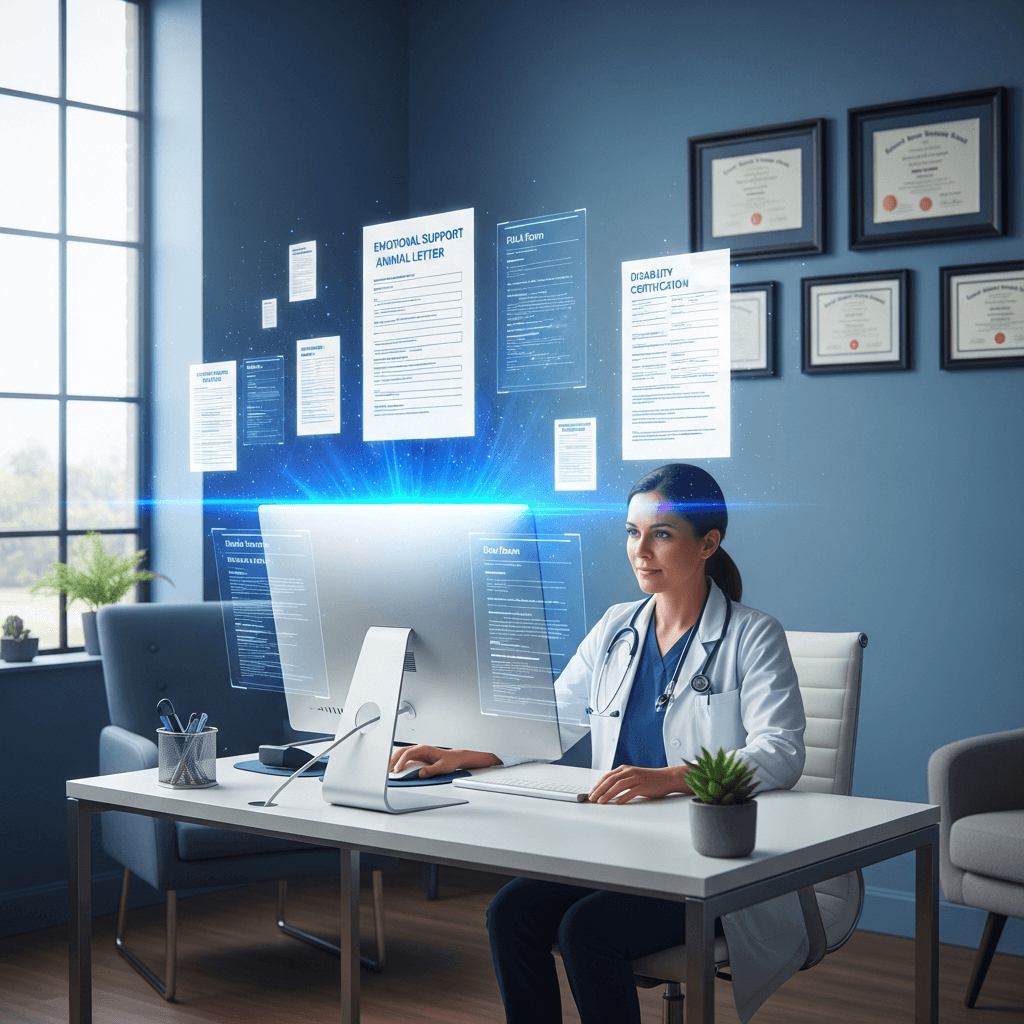
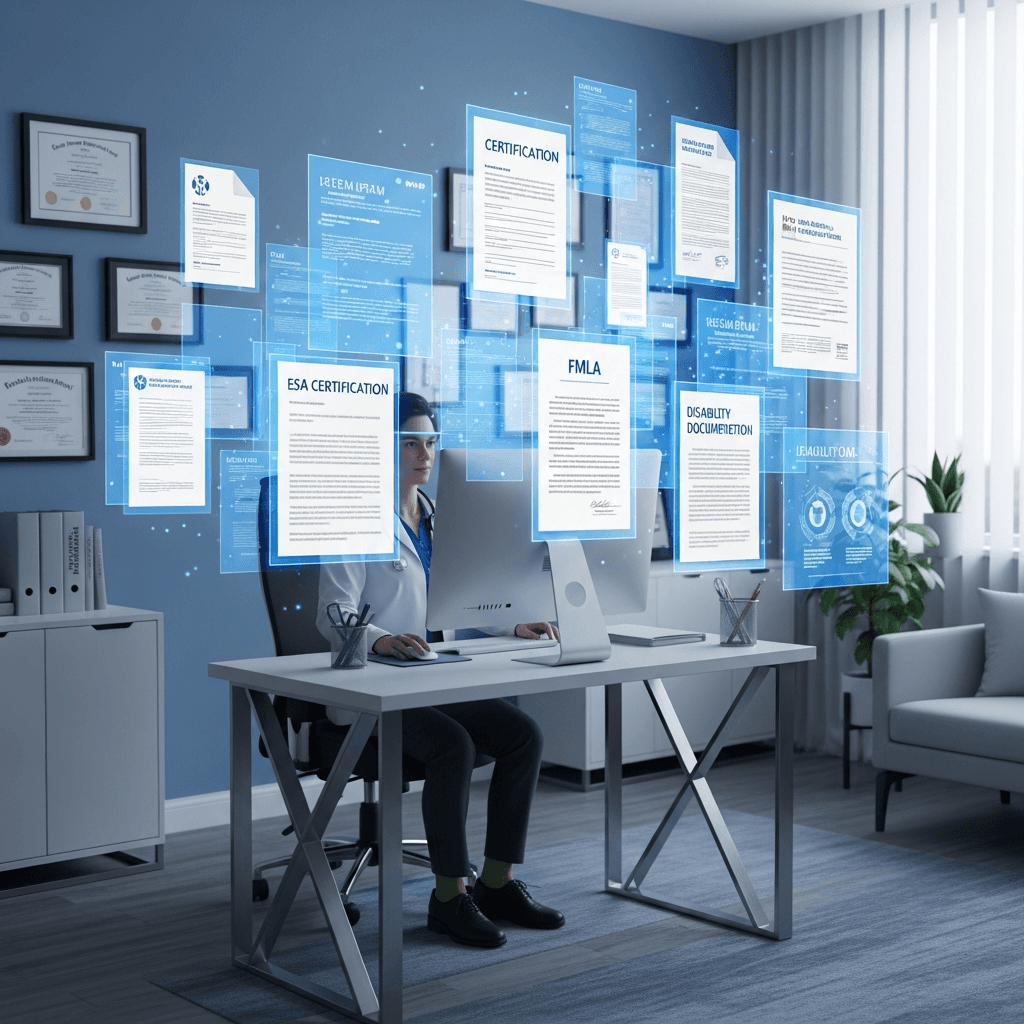
A patient needs an emotional support animal letter by tomorrow. Another requires FMLA paperwork for their employer. Three more are waiting on disability documentation. These documents pile up, stealing hours from patient care. Nextvisit handles this with integrated AI that generates accurate, personalized clinical documents in seconds rather than hours. It’s not a generic chatbot applied to healthcare. It’s a clinical documentation tool built specifically for psychiatric practice, with HIPAA compliance baked in from the start.

Photo of doctors working

The hidden time drain of mental health documentation

Every mental health practice faces the same problem: an overwhelming volume of paperwork that patients genuinely need but that consumes clinical time disproportionate to its difficulty. Emotional support animal certifications, complex disability evaluations, prior authorization letters, return-to-work documentation, each requires careful attention to detail, appropriate medical terminology, and defensible clinical reasoning. The traditional approach involves searching patient records, finding old templates, and manually customizing each document. That process typically takes 20 to 30 minutes per letter.

“Before implementing AI-assisted documentation, our clinicians spent nearly 25% of their week on administrative paperwork. Now, that same work takes less than 5% of their time, allowing them to see more patients and provide better care.” - Practice Administrator, Large Psychiatric Group

Intelligent document creation that understands context

Nextvisit’s AI doesn’t fill in blanks. It understands the clinical context of each request. When a clinician types ” Create an ESA letter for this patient based on their anxiety diagnosis,” the system pulls relevant information from the patient’s timeline: diagnosis codes, treatment duration, symptom severity, and functional impairments. The result is a professionally formatted letter that accurately reflects the patient’s clinical picture and includes appropriate medical justification.

Complex forms like FMLA packets or prior authorizations require specific medical language that satisfies regulatory requirements. Nextvisit’s AI has been trained on thousands of approved documents, learning the precise phrasing that insurance companies, employers, and government agencies expect to see. This reduces rejection rates and the need for time-consuming revisions.

Personalization without the manual work

Cookie-cutter templates often miss important nuances. When generating a return-to-work letter, Nextvisit’s AI considers not just the primary diagnosis but also medication side effects, therapy progress, specific workplace triggers discussed in sessions, and accommodations that might support successful reintegration.

This level of detail previously required clinicians to review multiple sessions and piece together information from different parts of the chart. Now the AI presents a comprehensive draft that clinicians can review and approve in minutes, and it flags potential inconsistencies or missing information before the document is finalized.

Security and compliance

Unlike consumer AI tools that pose real privacy risks, Nextvisit operates entirely within a HIPAA-compliant environment. Patient data never leaves the secure platform, and all AI processing happens within encrypted channels designed for healthcare. Clinicians can use AI assistance without concerns about confidentiality or professional ethics violations.

The platform maintains detailed audit trails of all document generation. Every draft, edit, and final version is logged with timestamps and user identification, creating a transparent record for clinical governance and potential legal requirements.

Real-world impact on practice operations

Practices using Nextvisit’s AI documentation report significant operational improvements. Staff no longer field constant calls about document status because letters are completed during or immediately after appointments. Patient satisfaction improves when urgent documentation needs are met promptly. Clinicians report reduced burnout when freed from repetitive administrative tasks.

The financial impact is real. Reducing documentation time by 80% or more lets practices either see additional patients or allow clinicians more time for complex cases. The reduction in administrative overhead often pays for the technology investment within the first month of implementation.

What’s coming next

Future developments will likely include predictive documentation suggestions based on appointment types, automated renewal reminders for time-sensitive forms, and patient-facing portals where individuals can request specific documents that the AI prepares for clinician review. As natural language processing continues to advance, the goal is AI that handles more of the administrative surface area so clinicians can focus on the work that actually requires their judgment.

See it on your workflow

Twenty minutes, one mock visit. You leave with a note in your template.

We run a mock session live, draft the note, and walk through what the downstream claim would look like. No slides. No sales deck.

Live in 2 weeks or less BAA signed by default 30-day money back